Dry Herbs cab be used in Indian Cooking? A Satvik Guide

cab be used in Indian Cooking? A Satvik Guide
Walk into most Indian kitchens today and you’ll find a small shelf, maybe near the masala dabba, holding jars of dried oregano, chili flakes, maybe some basil or thyme picked up on a whim. These herbs travelled a long way to get here, yet they’ve settled into our cooking almost like they always belonged. The question a lot of Satvik home cooks ask us is simple: can these herbs fit into a no-onion-no-garlic kitchen without losing what makes Indian food taste like Indian food?
The answer is yes, and it’s easier than most people expect. Dry herbs are naturally suited to Satvik cooking because their flavor doesn’t come from pungency or sharpness the way onion and garlic do. They bring aroma, a little bitterness, a bit of earthiness — exactly the kind of depth a Satvik dish often needs. At Spishri, we’ve spent years understanding how Vrindavan households build flavor without onion or garlic, and dry herbs have quietly become one of our favorite tools for it.
Why Dry Herbs Fit So Naturally Into Satvik Cooking
Satvik cooking has always relied on building flavor through spices, ghee, and fresh produce rather than through the sharper, more assertive notes of onion and garlic. This is exactly where dry herbs shine. Basil, thyme, rosemary, oregano — these aren’t pungent ingredients. They work through fragrance, not force, which makes them a natural companion to a Satvik kitchen that already leans on cumin, asafoetida (in its Satvik-approved form), ginger, and coriander for its backbone of flavor.
There’s a practical side to this too. Dry herbs don’t need the long simmering time that onion-garlic masalas often need to mellow out. A pinch added at the right moment can lift a dish without any elaborate process, which for families following Vaishnav dietary practices means quicker cooking without cutting corners on taste.
It’s worth being clear about where herbs belong, though. They’re not a replacement for the tadka that anchors a dal or sabzi — cumin, asafoetida, and ginger still do that job. Dry herbs work best as a separate layer, mostly in dishes that already lean Continental or Mediterranean in spirit: soups, roasted vegetables, tomato-based gravies, pizza, and pasta. Used this way, they add range to a Satvik kitchen instead of competing with the spices already doing the heavy lifting.
Getting to Know Your Dry Herbs: Basil, Thyme, Rosemary and More
Dried basil, thyme, and rosemary are usually associated with Italian or Mediterranean cooking, but they’ve quietly found their way into everyday Indian kitchens too, especially with the rise of home-style pizza, pasta, and continental snacks. Here’s a quick look at how each one behaves.
- Dried Basil — Sweet, slightly peppery. Works beautifully in tomato-based gravies, pasta sauces, and a simple vegetable soup. A pinch stirred in towards the end of cooking keeps its aroma from disappearing.
- Dried Thyme — Earthy and slightly minty. It holds up well to longer cooking, so it suits roasted vegetables, stews, or a hearty soup base.
- Dried Rosemary — Strong and pine-like. A little goes a long way. It pairs nicely with roasted potatoes, grilled paneer, or a garlic-free herb butter for bread.
- Oregano — Probably the most familiar to Indian households already, thanks to pizza. Works well on soups, roasted vegetables, and even sprinkled over fruit chaat for an unexpected twist.
- Chili Flakes — Not a herb technically, but almost always found alongside them. Adds heat without changing the base flavor of a dish.
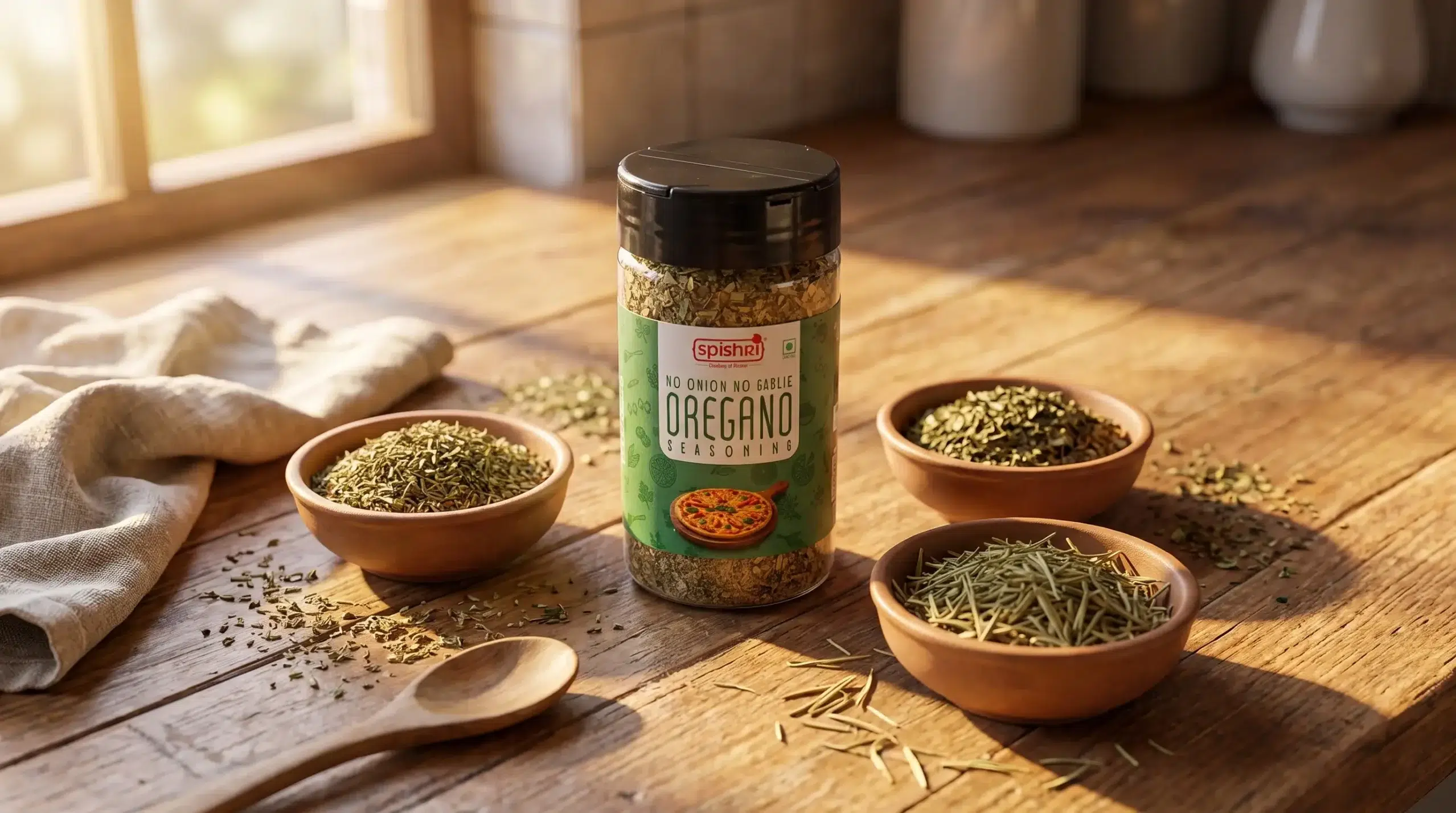
Spishri’s own Oregano, Chili Flakes, and Pizza Pasta seasoning blends are made with this exact need in mind — pure herbs, no onion or garlic in the mix — so they slot easily into a Satvik meal without any second-guessing.

How to Use Dried Herbs in Indian Cooking, Practically Speaking
Knowing how to use dried herbs in Indian cooking is really about timing and quantity more than anything complicated. A few things we’ve learned over years of cooking Satvik meals at home.
Add them at the right stage. Delicate herbs like basil and oregano should go in towards the end of cooking, once the flame is low or off, so their aroma stays intact. Sturdier herbs like thyme and rosemary can handle being added earlier, since they release flavor slowly and don’t burn off as quickly.
Bloom them in ghee. This is a very Indian trick applied to a very un-Indian ingredient. Just like you’d temper cumin or asafoetida in hot ghee, a quick tempering of dried herbs in warm ghee for a few seconds wakes up their oils and rounds out the flavor. Try this over roasted vegetables or a herby soup rather than over dal, where the traditional tadka already does the job.
Don’t overdo it. Dry herbs are concentrated. Half a teaspoon is often plenty for a pot serving four people. Start small, taste, and adjust — rosemary especially can turn bitter if used too generously.
Store them right. Keep dry herbs away from direct sunlight and moisture, in an airtight jar. This keeps them fragrant for months instead of losing potency within weeks, which matters if you’re stocking up during a trip or buying in bulk.

Bringing Global Flavors Home, the Satvik Way
One of the nicest parts about dry herbs is how they let a Satvik kitchen explore flavors that once felt out of reach. Craving a herby pizza on a Thursday when the temple community avoids onion and garlic? A base of tomato, our Pizza Pasta seasoning, and a scattering of oregano and chili flakes gets you there without compromise. Want something closer to a rustic Italian soup? Thyme, rosemary, and a good vegetable stock made without onion or garlic can carry that comfort just fine.
This is really at the heart of what we believe at Spishri — that anything can be Satvik, given the right ingredients and a little know-how. Growing up in Vrindavan, where the Girraj Dharan Store has served home kitchens since 1961, we saw how families never felt limited by Satvik principles. They simply found different ways to reach the same comforting flavors. Dry herbs are just the newest addition to that old, patient tradition of adapting without compromising.
A Few Dishes Worth Trying
- Herbed tomato soup with dried basil and a touch of black pepper, finished with cream.
- Roasted vegetables tossed with dried thyme, ghee, and rock salt.
- Home-style pizza on a roti or naan base, topped with Spishri’s Pizza Pasta seasoning, oregano, and chili flakes.
- Roasted potatoes with rosemary, ghee, and a little rock salt — simple and satisfying.
- Paneer tikka marinated with yogurt, our Peri Peri seasoning, and a hint of dried oregano before pan-roasting.
None of these need onion or garlic to taste complete. They just need herbs used with a little care, alongside spices made with the same intention.
Wrapping Up
Dry herbs don’t ask a Satvik kitchen to change its principles. If anything, they fit right into a way of cooking that has always valued fragrance and balance over sharpness. Used in the right place — soups, roasts, pizzas, pastas — rather than as a stand-in for a traditional tadka, a small jar of good quality dried basil, thyme, oregano, or rosemary can quietly expand what feels possible on a Satvik table.
If you’d like to start with blends already made with Satvik principles in mind, take a look at Spishri’s seasoning range — crafted in Vrindavan, free of onion and garlic, made the way we’ve always believed food should be made: honestly and with care.
Frequently Asked Questions
Are dried herbs like oregano, basil, and thyme considered Satvik?
Yes, dried herbs are naturally Satvik since they don’t contain onion, garlic, or any pungent additives. As long as the blend or seasoning you’re using is made without these ingredients, herbs like oregano, basil, thyme, and rosemary fit comfortably into a Satvik kitchen.
How do I use dried herbs in Indian cooking without overpowering the dish?
Start with a small quantity — around half a teaspoon for a family-sized portion — and add delicate herbs like basil or oregano towards the end of cooking. Sturdier herbs like thyme and rosemary can go in earlier, since they release flavor more slowly.
Can I substitute fresh herbs with dried ones in Indian recipes?
Yes, though dried herbs are more concentrated, so use about a third of the quantity you’d use for fresh herbs. Dried herbs also work well when bloomed briefly in warm ghee before being added to a dish.
Do dried herbs go well with traditional Indian spices?
They do, as long as they’re used in dishes suited to them. Herbs like thyme and rosemary pair nicely with roasted or slow-cooked vegetable dishes, adding fragrance alongside the existing spice base rather than replacing a dish’s core tempering.
How should dry herbs be stored to keep their flavor?
Keep them in an airtight jar, away from direct sunlight, heat, and moisture. Stored this way, most dried herbs stay fragrant and flavorful for several months.


 Combo Packs